
Beyond Oil: How Trinidad and Tobago Can Prosper After Energy
For more than a century, oil and natural gas have shaped Trinidad and Tobago’s economic identity. It has funded schools and hospitals, built highways, supported public services, created high-paying jobs, and allowed successive governments to maintain a standard of living that has been among the highest in the Caribbean. Yet, history reminds us that no natural resource lasts forever.
Whether our hydrocarbon reserves endure for another five years, ten years, or several decades is ultimately less important than recognizing a fundamental economic truth: every resource-dependent nation must eventually confront the question of what comes next.
This is not a prediction of impending crisis, nor is it a call for alarm. Rather, it is an invitation to engage in thoughtful national planning that includes not just the government but the private sector. Countries that prepare for structural change preserve prosperity. Those that delay often find themselves reacting under far less favourable circumstances.

Imagine a household where one parent earns an exceptionally high salary. That income pays the mortgage, covers school fees, funds vacations, and supports a comfortable lifestyle. If that salary were suddenly reduced by half, the family would not become poor overnight. They may have savings, investments, and a strong credit history. However, unless they adjust their spending or develop new sources of income, their standard of living would inevitably begin to decline.
National economies function in much the same way. Oil and gas are not simply commodities that Trinidad and Tobago exports. They are the principal source of government revenue and, perhaps more importantly, the country’s largest generator of foreign exchange. These industries generate the U.S. dollars required to purchase imported food, medicine, vehicles, machinery, and countless other goods that modern life depends upon. This distinction is crucial. The greatest long-term challenge is not merely replacing government revenue; it is replacing the foreign currency earnings that make international trade possible.
Economics often appears abstract until it touches everyday life. Consider a supermarket. The shelves are stocked with imported cereals, dairy products, medicines, household appliances, and baby formula. None of these goods can simply be purchased using the TT dollar. Overseas suppliers require payment in U.S. dollars or other major international currencies.

Our energy exports have traditionally provided those dollars and if export earnings were to decline substantially, fewer U.S. dollars would enter the economy. The consequences would extend well beyond government finances.
Businesses would wait longer to access foreign currency. Importers would struggle to replenish inventory. Certain products would become more expensive or less readily available. Overseas travel would become costlier. Even purchasing equipment for hospitals or manufacturing plants could become increasingly difficult. In other words, foreign exchange is to an economy what oxygen is to the human body. One rarely notices it until it becomes scarce.
When households experience financial strain, borrowing can provide temporary relief. Governments possess the same ability; however, debt cannot permanently replace declining national income. If Trinidad and Tobago were to finance persistent deficits through borrowing alone, public debt would rise steadily. Credit rating agencies would likely reassess the country’s financial strength, increasing the interest rates demanded by investors. Every additional dollar spent servicing debt would be one less dollar available for healthcare, education, infrastructure, and national security.
Borrowing is a bridge, not a destination. Many homeowners understand the relationship between income and debt. Suppose an individual earning TT$25,000 per month comfortably services a mortgage. If their income falls to TT$12,500, the bank will naturally question whether future lending remains prudent. The same principle applies nationally: as government revenues weaken, financial institutions become more cautious. Mortgage approvals may slow, borrowing conditions may tighten, and interest rates may gradually rise. None of these changes occur overnight, but they accumulate over time.
Economic transitions are rarely dramatic events but more often, they resemble slow-moving tides. It would be easy to frame this discussion solely in terms of loss. That would, however, overlook Trinidad and Tobago’s greatest strengths. Unlike many resource-dependent nations, Trinidad and Tobago possesses exceptional institutional advantages. Our financial sector is among the most sophisticated in the Caribbean. Our legal system enjoys international credibility. Our banking industry is stable and well-capitalised. Our workforce includes highly skilled professionals in engineering, finance, accounting, law, technology, and energy and our geographical position places us at the intersection of North America, South America, and the wider Caribbean. These assets cannot be exhausted.
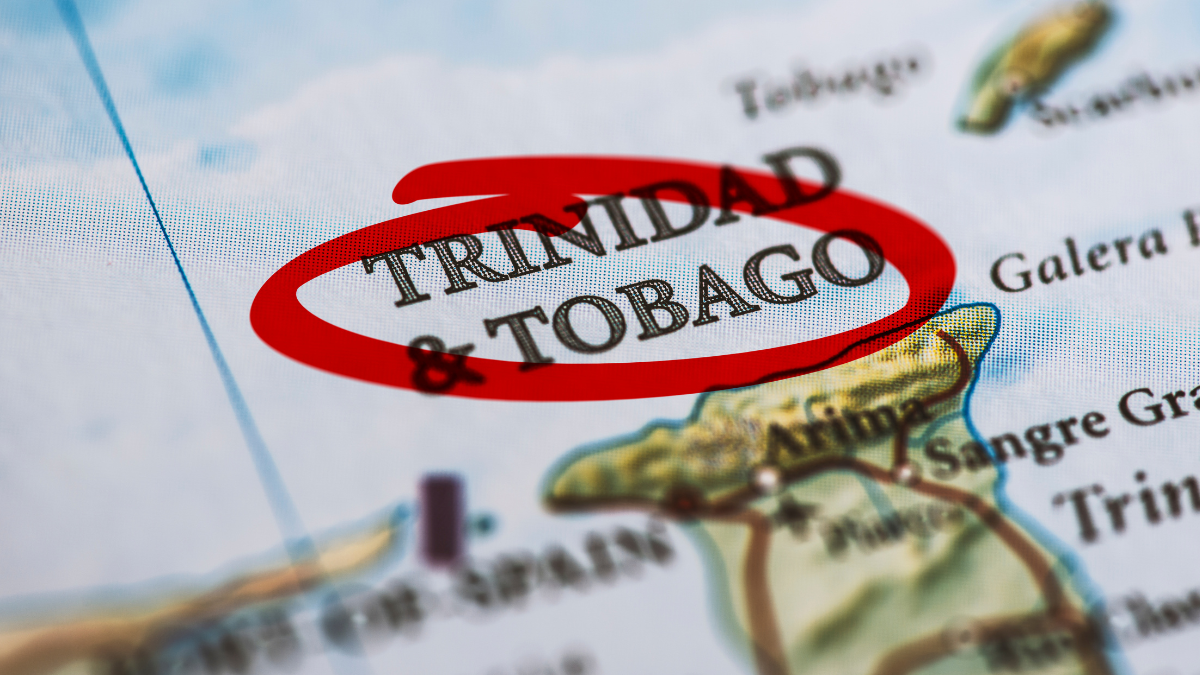
History provides valuable guidance: Norway discovered oil and used the resulting wealth to build one of the world’s largest sovereign wealth funds, which was valued at roughly USD 2.3 trillion at the end of 2025. Rather than allowing temporary resource income to finance permanent consumption, it transformed finite natural wealth into diversified financial wealth that continues generating income for future generations. While the mechanics are slightly different, this can be easily likened to our own sovereign wealth fund, the Heritage and Stabilization fund (HSF), which was intended to both absorb economic shocks where needed as well as for the benefit of future generations.
Singapore followed a different path. With almost no natural resources, they saw an opportunity during the third wave of globalization and invested relentlessly in education, logistics, finance, and trade. Singapore was able to attract foreign investment through manufacturers and multinational corporations. This allowed them to lean even further into their human resource and infrastructure. Today it ranks among the world’s most prosperous economies despite importing nearly all of its energy and natural resources.
The United Arab Emirates similarly recognised that hydrocarbons would not sustain future prosperity indefinitely. Over several decades it diversified into aviation, tourism, logistics, financial services, technology, and renewable energy. While oil remains important, it no longer defines the entire economy.
These examples differ in history and geography, but they share one common lesson: successful transitions begin long before necessity forces them. Diversification has often been discussed in Trinidad and Tobago. The challenge has never been identifying opportunities but sustaining execution. Several sectors possess genuine potential to become significant export earners.
Financial services can evolve beyond serving the domestic market to managing regional wealth, pension assets, investment funds, and cross-border advisory services.
Technology companies can export software, cybersecurity expertise, financial technology solutions, and digital business services without requiring extensive physical infrastructure.
Modern logistics can position Trinidad as the principal distribution centre for the southern Caribbean and northern South America.
Advanced manufacturing can leverage existing industrial capabilities to produce specialised chemicals, processed foods, packaging, medical supplies, and other higher-value products.
Agriculture, though unlikely to replace energy revenues directly, can reduce import dependence while strengthening food security as well as exports.
Tourism, particularly cultural and ecological tourism, offers opportunities to earn valuable foreign exchange while showcasing the nation’s unique heritage.
Collectively, these industries could generate a more balanced and resilient economy. To me, the most valuable resource Trinidad and Tobago possesses does not lie beneath the seabed. It resides within its people. Future prosperity will increasingly depend upon knowledge rather than natural resources. Educational investment in science, engineering, artificial intelligence, software development, finance, entrepreneurship, and advanced technical skills will determine whether future generations compete successfully in a rapidly changing global economy.
Countries do not become wealthy simply because they possess resources. They become wealthy because they develop productive citizens capable of creating value long after natural resources have been exhausted.
Economic transitions inevitably involve difficult choices. Fiscal reform, improved public sector efficiency, investment in education, infrastructure, and regulatory modernisation all require political courage and national consensus. These reforms should not be viewed as sacrifices. They represent investments in future resilience. The question we face, therefore, is not whether oil and gas will one day decline. Every producing nation eventually confronts that reality. The more important question is whether we choose to prepare while we still possess the financial capacity to do so.
History rarely rewards societies that wait for certainty before acting. The countries that have navigated structural economic change most successfully are those that recognised that prosperity is ultimately created not by finite resources, but by institutions, innovation, education, and enterprise. Trinidad and Tobago has every reason to approach the future with confidence.
We possess financial expertise respected throughout the region, an educated population, world-class industrial infrastructure, and a strategic geographic location that many nations would envy.
The next chapter of our national story need not be one of decline. If we invest wisely, diversify deliberately, and place equal value on human capital as we once placed on hydrocarbons, future generations may look back on this period not as the end of the energy era, but as the beginning of a more resilient, more innovative, and ultimately more prosperous Trinidad and Tobago.
The greatest wealth of any nation is not found beneath its soil.
It is found in the imagination, ingenuity, and determination of its people.